Steel Against Steel: A Martial Scholar's Comparison of Japanese Swordsmanship and European Fencing Traditions

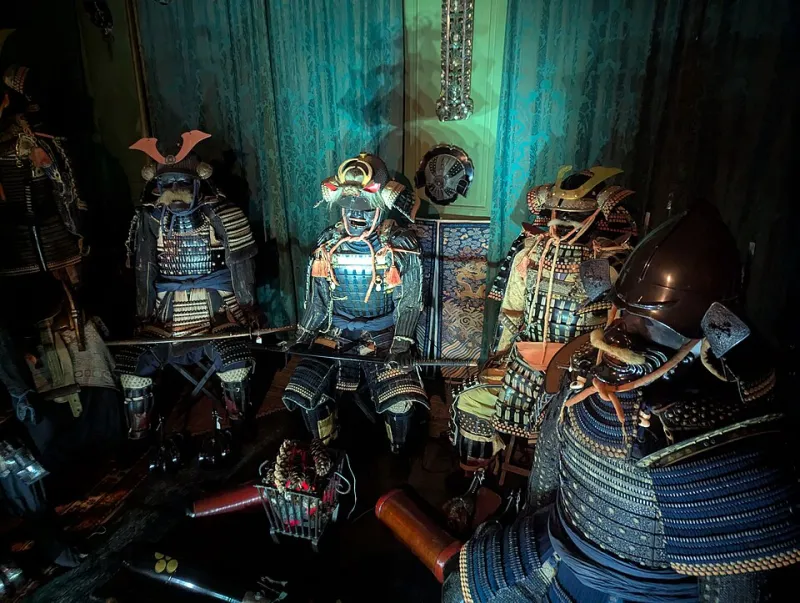
Photo: Syced, CC0, via Wikimedia Commons
Two of history's most sophisticated sword-fighting traditions developed independently across opposite ends of Eurasia, each shaped by distinct metallurgy, battlefield demands, and philosophical worldviews. Placing Japanese kenjutsu and European fencing traditions side by side reveals not only technical divergence but a profound meditation on how culture shapes combat—and how combat, in turn, shapes culture. For American martial artists increasingly drawn to both disciplines, the comparison illuminates the universal and the irreducibly particular.
Origins and Historical Context
The Japanese sword tradition traces its formal lineage to the late Heian period (794–1185 CE), when the emerging warrior class—the bushi—developed fighting methods suited to mounted combat on the plains and forests of the Japanese archipelago. Over subsequent centuries, as warfare evolved and the samurai transitioned increasingly to infantry engagements, kenjutsu (the art of the sword) was systematized into discrete schools, or ryūha, each preserving distinct technical and philosophical lineages. By the Edo period (1603–1868), hundreds of these schools existed, representing an extraordinary diversity of approaches united by common aesthetic and ethical commitments.
European swordsmanship followed a parallel but independent trajectory. The Germanic and Italian traditions that gave rise to what modern scholars call Historical European Martial Arts (HEMA) were codified in manuscripts beginning in the 14th century. The German Liechtenmeister Johannes Liechtenauer and Italian masters such as Fiore dei Liberi produced technical treatises—the fechtbücher—that documented longsword, dagger, and wrestling techniques with systematic rigor. Later, as firearms reshaped European warfare and civilian dueling culture emerged, the tradition bifurcated into the more athletic rapier traditions of 16th- and 17th-century Italy and Spain and the cut-and-thrust methods that persisted in military contexts.
Both traditions, therefore, were responses to genuine martial necessity. Neither was invented as sport or ceremony; both were refined in conditions where error carried lethal consequence.
The Weapons Themselves: Philosophy in Metal
Any serious comparison must begin with the weapons, because in both traditions, the sword was not merely a tool—it was an expression of values.
The Japanese katana is a curved, single-edged blade typically measuring between 23 and 29 inches, forged through a process of differential hardening that produces the iconic hamon (temper line) and a blade capable of extraordinary sharpness. The curvature is not decorative; it is functional, facilitating the drawing cut (nukitsuke) and optimizing the geometry of slashing technique. The katana's construction reflects a philosophy of refinement through constraint—every element serves a specific purpose, and beauty emerges as a byproduct of perfection in function.
The European longsword—the primary weapon of the German and Italian classical traditions—is a double-edged, cruciform weapon typically measuring 40 to 48 inches overall, designed for both cutting and thrusting. Its design reflects the tactical demands of armored combat, where thrusting into gaps in plate armor was often more decisive than cutting. The longsword's versatility is its defining characteristic; it can be wielded with one hand, two hands, or in half-sword grip (grasping the blade itself to enable close-range thrusting), making it a remarkably adaptive instrument.
These differences in design encode different assumptions about combat: the katana privileges speed, draw, and the decisive single cut; the longsword prizes structural versatility and the ability to adapt within an engagement.
Technical Principles: Convergence and Divergence
Despite their independent development, the two traditions share certain fundamental insights about armed combat. Both recognize the primacy of timing over raw speed. Both employ the concept of what the Japanese call sen—initiative—and what German masters termed Vor (before) and Nach (after), describing the tactical advantage of acting rather than reacting. Both traditions also emphasize that a sword fight is decided not by a single technique but by the quality of one's positioning, structure, and mental composure in the moments preceding contact.
The divergences, however, are equally instructive. Japanese kenjutsu, particularly in its classical forms, places extraordinary emphasis on ma-ai—combative distance—and on the management of the interval between practitioners. The ideal engagement in many Japanese schools involves a single, decisive exchange rather than extended sparring. The mental preparation for that exchange—the cultivation of zanshin (continued awareness) and mushin (mind without attachment)—is considered inseparable from technical proficiency.
European longsword traditions, particularly the German school, are characterized by a more dynamic engagement model. The concept of Winden (winding)—maintaining blade contact while rotating to find advantageous angles—presupposes an extended, fluid exchange in which both practitioners are continuously reading and redirecting force. The German masters spoke of Fühlen (feeling), the ability to sense an opponent's intention through blade contact and respond instantaneously. This is not a reactive model but an integrative one: information gathered through contact informs action in real time.
Both approaches demand exceptional sensitivity and presence. They simply locate those qualities differently within the arc of an engagement.
Philosophical Dimensions: The Sword as Spiritual Path
Perhaps the most significant distinction between the two traditions lies not in technique but in metaphysics. Japanese swordsmanship, particularly from the Edo period onward, developed an explicit spiritual dimension. The concept of kendo (way of the sword)—as distinct from kenjutsu (technique of the sword)—reflects a deliberate reorientation of martial practice toward self-cultivation. The sword becomes a vehicle for the development of character, and technical mastery is understood as inseparable from moral and psychological refinement.
This philosophical dimension is embedded in the language of the tradition. Terms like fudoshin (immovable mind), shoshin (beginner's mind), and kenzen ichinyo (sword and Zen are one) point toward a conception of martial practice as a form of moving meditation—a means of confronting and transcending the ego's limitations.
The European traditions, while not devoid of moral seriousness, were less systematically oriented toward spiritual development. The fechtbücher are technical documents; they describe what to do and when, not how to cultivate the inner state from which effective action arises. The chivalric ideals that surrounded European sword culture provided an ethical framework, but this was largely external to the technical tradition rather than integrated within it.
This distinction helps explain why American practitioners who approach sword arts as a contemplative practice tend to gravitate toward Japanese traditions, while those drawn to the intellectual puzzle of historical reconstruction are more likely to pursue HEMA.
American Practitioners and the Cross-Cultural Appeal
The contemporary American martial arts landscape reflects a genuine and growing interest in both traditions. HEMA clubs and study groups have proliferated across the country over the past two decades, driven in part by the accessibility of digitized historical manuscripts and the appeal of recovering a largely forgotten heritage. Meanwhile, enrollment in kendo, iaido, and classical kenjutsu programs has remained strong, sustained by the depth of the Japanese philosophical tradition and the institutional support of established dojos.
Practitioners who have trained seriously in both disciplines often describe the experience as mutually illuminating. The European tradition challenges assumptions about distance, structure, and tactical adaptability that Japanese practice can sometimes calcify into habit. The Japanese tradition offers a depth of contemplative framework and aesthetic intentionality that many HEMA practitioners find themselves seeking as their technical skills mature.
The comparison, ultimately, is not a competition. It is a conversation between two of humanity's most sophisticated investigations into the nature of conflict, discipline, and the cultivation of the human spirit through the medium of the sword. For any serious student of the warrior's path, both traditions deserve careful and respectful study.