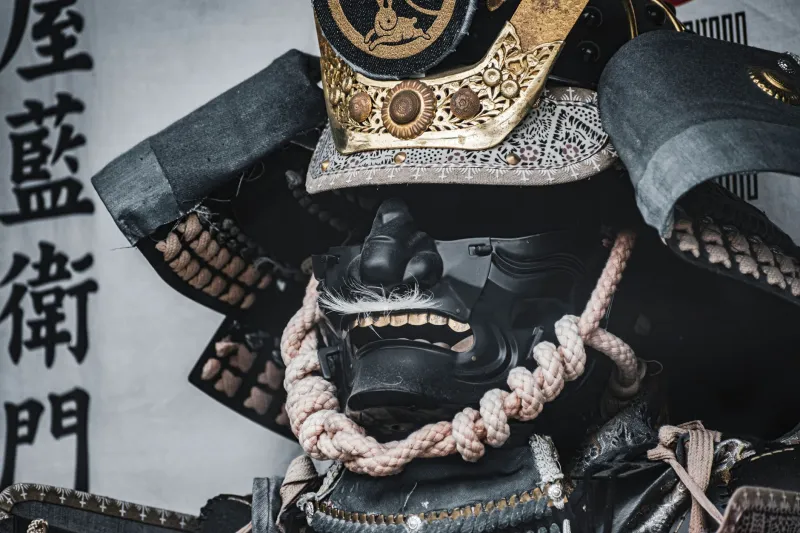
Reborn Without Breaking: How Samurai Navigated Radical Transformation and Kept Their Souls Intact
In contemporary American culture, reinvention has become something of a national pastime. Career coaches market it. Business schools teach it. Social media celebrates it. Yet for all the enthusiasm surrounding personal transformation, very few frameworks address the most difficult question at the center of every major life change: How do you become someone new without losing the person you already are?
Japan's samurai class wrestled with precisely this question — not as a lifestyle preference, but as a matter of survival. The feudal world they inhabited was one of relentless political turbulence, where a warrior's role, allegiance, and social standing could be obliterated overnight. What emerged from centuries of navigating those upheavals was a sophisticated philosophy of identity and change, one that modern readers would do well to study carefully.
The Fluid Self in a Fixed Code
It is tempting to view Bushido — the warrior's code — as a rigid set of rules designed to produce a fixed type of person. In reality, the code functioned more like a compass than a map. It did not prescribe a single destination; it oriented the warrior toward a consistent set of values regardless of the terrain he happened to be crossing.
This distinction matters enormously. When a samurai transitioned from active military service to the role of scholar, administrator, or monk — transitions that were far more common than popular legend suggests — he did not abandon his identity. He carried it forward through his values: discipline, sincerity, purposeful action, and an unflinching commitment to self-examination. The form of his life changed; the core did not.
The Zen Buddhist concept of mushin — often translated as "no-mind" or a state of mental clarity unattached to fixed outcomes — provided philosophical scaffolding for this kind of transformation. A warrior trained to release attachment to a particular role was, paradoxically, freer to inhabit new roles fully. He was not defined by his position; he was defined by how he occupied it.
From Sword to Brush: The Scholar-Warriors
Perhaps no historical example illustrates samurai reinvention more vividly than the remarkable number of warriors who became distinguished scholars, poets, and artists. Yamaga Sokō, the seventeenth-century military strategist, spent years in exile following a political dispute and used that enforced removal from martial life to produce some of the most influential writings on Bushido ever composed. His exile did not diminish him. It redirected him.
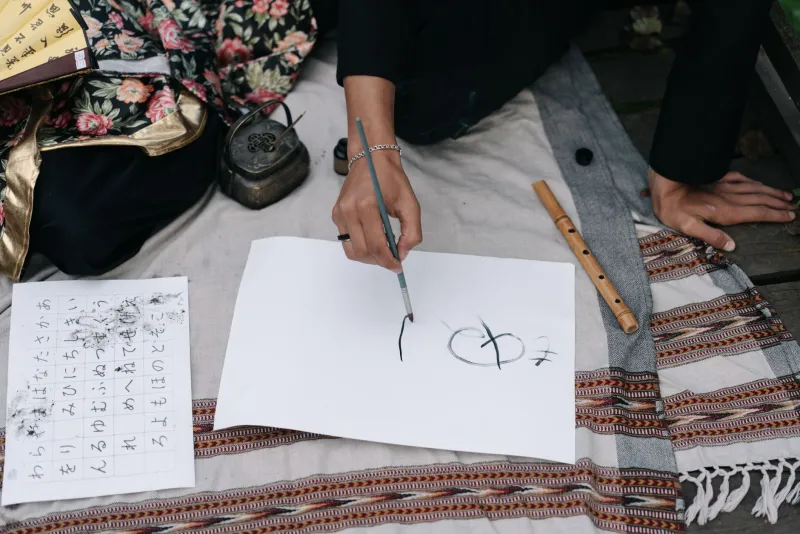
Similarly, Miyamoto Musashi — Japan's most celebrated swordsman — devoted the final years of his life not to combat but to calligraphy, ink painting, and the composition of The Book of Five Rings. The man who had survived over sixty duels without a single defeat chose to spend his last days with a brush rather than a blade. This was not retirement in the Western sense. It was the fullest possible expression of who he had always been: a man committed to mastery, regardless of the medium.
These transitions were neither accidental nor reluctant. They reflected a deliberate philosophical stance — the understanding that identity resides in how one engages with life, not what one does for a living.
The Ronin as Archetype of Reinvention
No figure in the samurai tradition embodies radical transformation more starkly than the ronin — the masterless warrior whose lord had died, been defeated, or whose service had simply ended. In feudal Japan, the ronin occupied an ambiguous social space. He had lost the institutional identity that defined him, yet he remained a samurai by training, temperament, and inner conviction.
Many ronin responded to this displacement with dissolution — drifting into poverty, banditry, or despair. But a significant number responded with something far more instructive: they rebuilt. They became teachers, establishing dojo schools that transmitted martial knowledge across generations. They entered service as bodyguards or administrators. Some, like the forty-seven ronin of the Akō incident, channeled their masterless condition into a mission of profound moral purpose, accepting the full weight of its consequences.
What separated the ronin who endured from those who collapsed was not talent or luck. It was the capacity to locate identity below the level of social role — to recognize that who they were could not be taken from them even when everything else had been.
The Three-Part Framework for Honorable Reinvention
Drawing from samurai philosophy, three principles emerge that structured how warriors navigated identity during periods of radical change.
First: Acknowledge the ending honestly. Samurai culture placed enormous value on clear-eyed self-assessment. Pretending that a chapter had not closed — that a lost battle was still winnable, that a dissolved allegiance still held — was considered a form of self-deception that corroded both judgment and character. Honoring an ending was not weakness. It was the prerequisite for beginning again with integrity.
Second: Carry the essential, release the incidental. A warrior in transition had to distinguish between what defined him and what merely described his current circumstances. His rank, his clan affiliation, his specific duties — these were incidental. His discipline, his sense of purpose, his relationship to truth — these were essential. Reinvention meant releasing the former while protecting the latter with fierce determination.
Third: Commit to the new role completely. Half-hearted transitions were regarded with contempt in samurai culture. If a warrior became a scholar, he was expected to pursue scholarship with the same total dedication he had once brought to combat. Nostalgia for a former role — lingering in it mentally while occupying a new one physically — was seen as a failure of both courage and respect for the present.
What This Means for the Modern Reader
The American workforce has undergone seismic disruption over the past two decades. Careers that once lasted a lifetime now span multiple industries. The average worker in the United States changes jobs more than a dozen times before retirement, and many change fields entirely. The psychological challenge this creates — the loss of professional identity, the uncertainty of transition, the fear of starting over — is not merely practical. It is existential.
The samurai framework offers something that most contemporary reinvention advice does not: a philosophy of continuity within change. It suggests that the self capable of navigating transformation is not the self that clings to former roles, nor the self that abandons all prior identity in pursuit of novelty. It is the self that knows what it is at the deepest level and carries that knowledge forward, undiminished, into whatever comes next.
The blade changes hands. The warrior does not disappear.