The Weight of Command: What Samurai Generals Understood About Leading When No One Else Could Decide
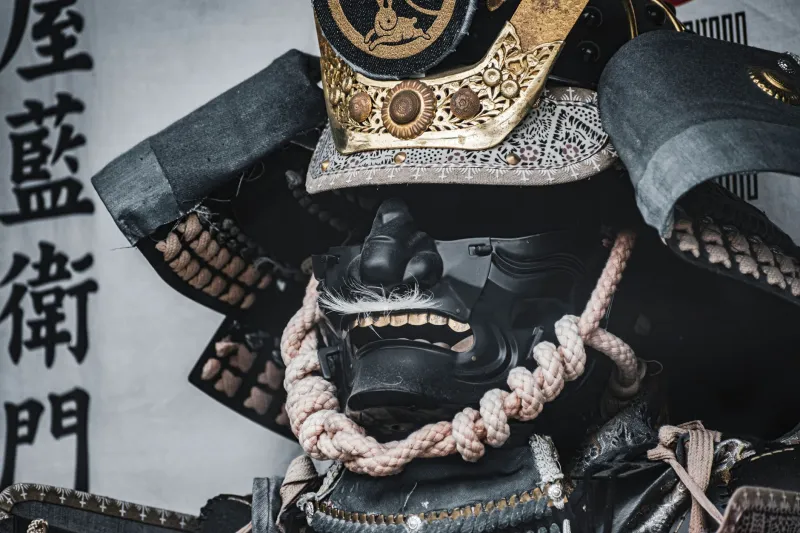
There is a particular kind of solitude that has nothing to do with being physically alone. It is the solitude of the person who must decide — the executive whose team has exhausted its analysis, the general whose lieutenants have offered their counsel, the leader who recognizes that the moment of delegation has passed and the moment of decision has arrived. Every person who has occupied a genuine position of authority knows this feeling. Japan's samurai commanders knew it with an intimacy that modern leaders rarely encounter.
In feudal Japan, the decisions made by daimyo and battlefield commanders were not theoretical. They were immediate, irreversible, and measured in human lives. The general who ordered a charge miscalculated did not face a difficult quarterly review. He watched his men die. This proximity to consequence gave samurai leadership philosophy a weight and precision that repays careful study — particularly for those who lead in high-stakes environments today.
The Structural Loneliness of Command
Samurai military culture was, in many respects, deeply collaborative. Commanders surrounded themselves with councils of experienced retainers, relied on intelligence networks, and valued the counsel of loyal subordinates. The concept of giri — duty — extended horizontally as well as vertically, creating a web of mutual obligation that bound the leader to his men as surely as it bound the men to their lord.
And yet, the final decision was always singular. The moment of command — the order that committed forces, that chose one path over another, that accepted certain loss in pursuit of possible gain — belonged to one person. No council could share that responsibility, regardless of how thoroughly it had been consulted. This was not a design flaw in the system. It was the system's most fundamental feature.
Tokugawa Ieyasu, who would eventually unify Japan and establish the Edo shogunate, understood this principle with extraordinary clarity. His path to power was strewn with decisions that alienated former allies, sacrificed short-term advantage, and placed enormous burdens on those who served him. At the Battle of Sekigahara in 1600 — the decisive engagement that determined the shape of Japan for two and a half centuries — Ieyasu made command decisions in real time that his generals could not fully comprehend in the moment. The isolation of that comprehension was, in a meaningful sense, the price of his authority.
When Loyalty to Superiors Conflicted With Loyalty to People
Few tensions in samurai history were more psychologically corrosive than the conflict between obligation to a lord and obligation to the people under one's direct protection. This was not an abstract ethical dilemma. It was a lived reality that confronted commanders with devastating regularity.
The case of Naoe Kanetsugu, chief retainer to the Uesugi clan in the late sixteenth century, illustrates the point with particular force. Kanetsugu served Uesugi Kagekatsu with legendary devotion, yet his service repeatedly required him to make decisions that placed the clan's survival above the welfare of individual retainers and communities. The letters he left behind — collected and studied by historians of the period — reveal a man acutely conscious of the human cost embedded in every strategic choice, and equally conscious that hesitation in the face of that cost was itself a form of failure.
This tension finds a direct modern parallel in the experience of American executives who must make decisions that serve organizational survival at the expense of individual employees — plant closures, workforce reductions, strategic pivots that render entire departments obsolete. The samurai framework does not offer a comfortable resolution to this tension. It offers something more honest: the acknowledgment that the tension is real, that it cannot be dissolved by clever thinking, and that the leader's task is to bear it with clear eyes rather than rationalize it away.
The Discipline of Deciding Without Certainty
One of the most striking features of samurai command philosophy was its explicit rejection of certainty as a precondition for action. The concept of fudōshin — immovable mind — did not refer to a state of confident knowledge. It referred to a quality of mental stability that allowed the commander to act decisively in the absence of complete information, without being paralyzed by what he did not know.
Takeda Shingen, one of the most formidable military commanders of the Sengoku period, was renowned for his ability to make rapid decisions under conditions of profound uncertainty. His famous battle formations and tactical innovations were not products of perfect intelligence. They were products of a mind trained to extract maximum clarity from available information and then commit — fully, without the corrosive second-guessing that destroyed lesser commanders.
Shingen's approach rested on a principle that modern decision science has since validated empirically: that the quality of a decision is not determined solely by its outcome. A commander who reasons carefully, gathers what information is accessible, consults appropriate counsel, and then decides with full commitment has made a good decision — even if the outcome proves unfavorable. The leader who waits for certainty that never arrives has made a bad decision by default, regardless of what eventually happens.
The Cost That Cannot Be Delegated
What samurai history makes unmistakably clear is that the psychological cost of command — the weight of decisions made on behalf of others, the knowledge of harm caused even by correct choices — cannot be transferred. It can be shared, to a degree, through honest communication with trusted subordinates. It can be processed through reflection, ritual, or the kind of disciplined self-examination that samurai culture encoded in practices ranging from Zen meditation to the formal review of battle conduct. But it cannot be eliminated, and any leader who believes otherwise is deceiving themselves.
The most respected samurai commanders were not those who appeared unburdened by their authority. They were those who bore its weight visibly and honestly — who allowed their subordinates to see that the decisions being made were understood to carry genuine human cost, and who demonstrated through their conduct that this understanding made them more rigorous, not less decisive.
A Standard That Still Applies
For American executives, military officers, nonprofit directors, and anyone else who occupies a position where consequential decisions ultimately fall to them, the samurai commander's experience offers a clarifying standard. It suggests that authentic leadership is not the performance of confidence. It is the disciplined management of uncertainty, the honest acknowledgment of cost, and the willingness to carry alone what cannot be shared — not because the leader is superior to those around them, but because that is what the position requires.
The loneliness of command is not a problem to be solved. It is a condition to be honored.