Stillness Under Pressure: How Ancient Samurai Mental Disciplines Are Transforming the Modern Martial Arts Mind
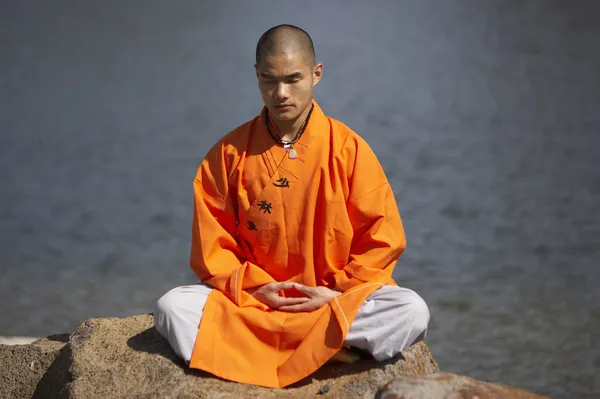
Photo: ShaolinTorrance, CC BY-SA 3.0, via Wikimedia Commons
There is a moment familiar to every serious martial artist: the instant before engagement when the body tightens, the breath shortens, and the mind floods with noise. For the classical samurai, this moment was not a weakness to be hidden—it was a frontier to be conquered. Centuries before sports psychologists coined terms like "flow state" or "performance anxiety," Japan's warrior class had already developed a sophisticated inner technology for navigating exactly this threshold. Today, that technology is experiencing a remarkable renaissance inside American dojos and, increasingly, within the halls of academic neuroscience.
The Concept of Mushin and Why It Matters Now
At the heart of samurai psychological training lies mushin—rendered in English as "mind without mind" or, more precisely, a state of mental clarity unburdened by conscious deliberation. Rooted in Zen Buddhist philosophy and refined through centuries of swordsmanship, mushin describes the condition in which a practitioner responds to circumstance without the interference of fear, ego, or overthinking. The blade moves not because the warrior commanded it, but because the warrior's mind has ceased to obstruct it.
For modern practitioners, the implications are immediate and practical. Dr. Sarah Lindqvist, a cognitive neuroscientist at the University of Colorado whose research focuses on embodied cognition and high-stakes decision-making, describes the neurological parallel in direct terms. "What the samurai tradition identified as mushin maps remarkably well onto what we now understand as the suppression of prefrontal over-regulation during skilled motor performance," she explained in a recent interview. "When an expert practitioner stops consciously monitoring every movement, performance quality typically improves. The samurai didn't have fMRI scanners, but they observed this phenomenon with extraordinary precision."
Across the country, dojo instructors are translating this principle into structured curriculum. At a traditional budo school in Portland, Oregon, head instructor Marcus Tanaka—who holds advanced ranks in both Kendo and Aikido—incorporates classical breathing exercises drawn from misogi (ritual purification practices) alongside modern mindfulness protocols. "My students come in carrying everything: work stress, relationship anxiety, the noise of their phones," he said. "The classical methods give them a concrete pathway into stillness. It's not mysticism—it's a repeatable mental skill."
Visualization: The Samurai's Inner Rehearsal
Beyond mushin, classical samurai training placed considerable emphasis on kanso—a quality of simplicity and mental economy—and on structured visualization practices that predate modern sports psychology by several hundred years. Historical accounts of legendary swordsmen such as Miyamoto Musashi reveal practitioners who spent extended periods in meditative isolation, mentally rehearsing encounters with such precision that the boundary between imagination and physical preparation became deliberately blurred.
This approach finds a striking echo in contemporary athletic science. Visualization, or mental imagery training, is now a standard component of elite athletic preparation in the United States, employed by Olympic programs and professional sports franchises alike. Yet many dojo instructors argue that the classical samurai model goes further than its modern counterpart, demanding not merely the rehearsal of successful outcomes but the full psychological confrontation with failure, injury, and death.
"Western sports visualization tends to be positive-outcome focused," observed Dr. Lindqvist. "The samurai tradition required practitioners to sit with the worst possible scenario—their own death—and achieve equanimity within that contemplation. That is a far more demanding psychological exercise, and emerging trauma research suggests it may have profound applications for building genuine resilience rather than simple confidence."
This distinction is not lost on practitioners working with military veterans and first responders. Several trauma-informed dojo programs operating in cities including Chicago, San Diego, and Atlanta have begun integrating classical budo psychological frameworks into therapeutic contexts, working alongside licensed counselors to address PTSD and hypervigilance. The structured, physically grounded nature of martial training provides what many participants describe as an accessible entry point into emotional processing that conventional talk therapy alone does not always offer.
Decision Paralysis and the Warrior's Resolve
One of the most practically resonant aspects of samurai mental training for contemporary Americans is its direct address of decision-making paralysis. Classical texts, including the Hagakure by Yamamoto Tsunetomo and Musashi's Book of Five Rings, return repeatedly to the necessity of decisive action—not recklessness, but the capacity to commit fully to a chosen course without the crippling hesitation born of excessive deliberation.
In an era characterized by information overload and what psychologists term "analysis paralysis," this emphasis carries obvious relevance beyond the dojo. Corporate leadership coaches have begun incorporating budo decision-making frameworks into executive training programs, a trend covered elsewhere on this site. But within the martial arts community itself, the application is more immediate and physically verifiable. A practitioner who freezes under pressure during sparring receives instant, unambiguous feedback. The dojo, in this sense, functions as a controlled laboratory for cultivating the psychological attribute the samurai called fudoshin—the immovable mind.
"Fudoshin is not stubbornness," Tanaka was careful to clarify. "It is the capacity to remain centered and responsive regardless of external pressure. You can be moved physically, but your mental foundation does not collapse. That quality translates directly into how my students handle difficult conversations at work, how they respond to unexpected crises. The training is martial in form but human in application."
Bridging Centuries Without Losing Depth
Not everyone in the traditional martial arts community welcomes the intersection of classical practice with contemporary wellness culture. Some senior practitioners express concern that the psychological dimensions of budo risk being stripped of their philosophical and spiritual context, reduced to productivity hacks or anxiety-management tools divorced from the rigorous ethical framework within which they were originally embedded.
This concern deserves serious consideration. The samurai mental disciplines did not exist in isolation—they were inseparable from a comprehensive worldview encompassing loyalty, mortality, aesthetic sensibility, and moral obligation. Extracting mushin from that context and repackaging it as a performance optimization technique may yield short-term results while obscuring the deeper purpose the practice was designed to serve.
The most thoughtful practitioners and researchers working in this space appear acutely aware of this tension. Dr. Lindqvist herself advocates for what she describes as "contextually honest adaptation"—borrowing from classical frameworks with transparency about their origins and underlying values rather than treating them as culturally neutral tools. Tanaka frames it more simply: "You have to earn the stillness. It doesn't come from a weekend workshop. It comes from years of showing up, being uncomfortable, and learning to breathe through it. That's what the samurai understood, and that's what the dojo still teaches—if you let it."
The warrior's mind, it turns out, was never merely a weapon. It was, and remains, a lifelong discipline of becoming.