The Bowl, the Breath, and the Blade: How Chanoyu Taught Samurai to Embrace Their Own Mortality
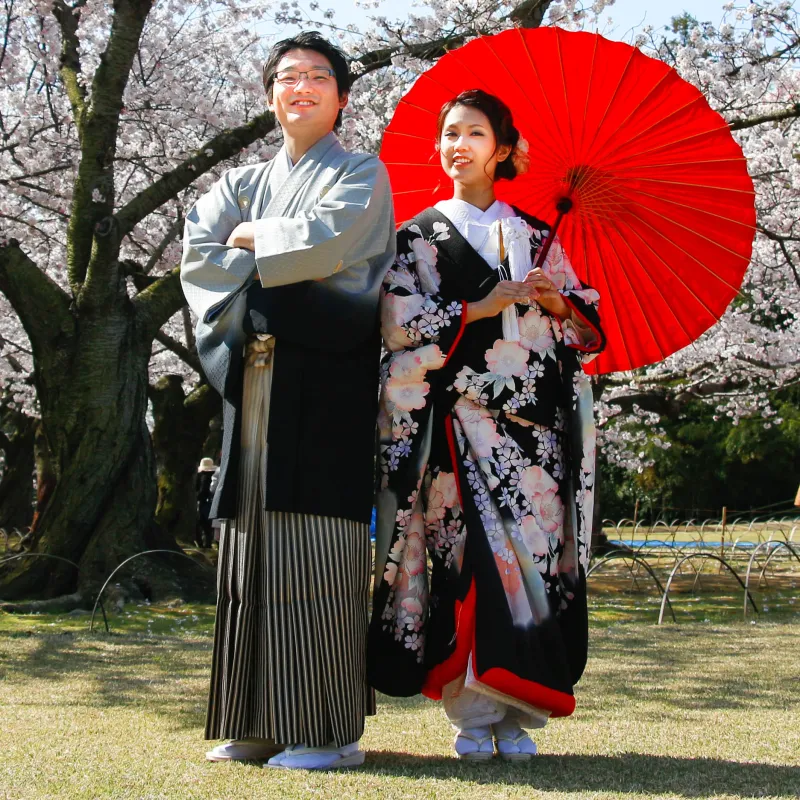
Photo: Japanese tea ceremony chado matcha traditional tearoom zen, via www.goodfreephotos.com
Imagine a warrior who has spent the morning in sword practice, drilling the same cutting motion until muscle memory overtakes conscious thought. In the afternoon, he kneels in a small, deliberately spare room. He watches steam rise from a cast-iron kettle. He receives a bowl of whisked green tea with both hands, turns it carefully, and drinks. The silence is complete. This, too, is training.
For the samurai of feudal Japan, the tea ceremony — chanoyu, or literally "hot water for tea" — was not a social nicety appended to a warrior's life. It was a discipline woven into the psychological and spiritual architecture of what it meant to face death with composure. To understand why requires looking closely at what chanoyu actually demanded of its participants, and how those demands intersected with the samurai's most fundamental professional reality.
The Zen Foundation
The philosophical backbone of chanoyu as it developed in the fifteenth and sixteenth centuries was Zen Buddhism, a tradition that had already exercised deep influence over samurai culture. Zen's emphasis on direct experience over intellectual abstraction, on the present moment as the only real moment, aligned naturally with the demands of combat. A warrior distracted by fear of future death or regret over past failure was a warrior who would hesitate at precisely the wrong instant.
Sen no Rikyū, the sixteenth-century tea master who formalized chanoyu into the discipline recognized today, was deeply embedded in the world of the samurai. He served as tea master to Oda Nobunaga and later to Toyotomi Hideyoshi, two of the most powerful military rulers in Japanese history. This was not a coincidence of scheduling. These men understood that what Rikyū was teaching in the tearoom had direct application to how a person — and particularly a warrior — could inhabit the present moment without flinching.
Rikyū's foundational concept, ichi-go ichi-e, translates approximately as "one time, one meeting" — the recognition that each encounter is singular and will never occur again. Applied to tea, this meant approaching each ceremony with complete attention, as though it were the only one. Applied to combat, the implication was stark and clarifying: each engagement might be your last, so meet it fully.
The Architecture of Presence
What made chanoyu such an effective vehicle for this philosophy was its relentless structural precision. Every movement within the ceremony — the folding of the fukusa cloth, the placement of utensils, the angle at which the bowl is presented — is governed by established form. Beginners often misread this formality as mere etiquette. In practice, it functions as something closer to a moving meditation.
When the mind must attend to the exact sequence and quality of each gesture, there is no cognitive space remaining for anxious anticipation or distraction. The practitioner is, by the design of the ritual itself, forced into the present. This is not passive relaxation. It is active, disciplined presence — the same quality that separates a master swordsman from a merely competent one.
The physical environment of the traditional tearoom reinforced this. The nijiriguchi, a small crawl-through entrance that required even the most powerful samurai to bow and remove his swords, was an architectural statement about equality and vulnerability. Inside that room, rank and reputation meant nothing. The warrior entered without his weapons, without his status, and without the psychological armor those things provided. He was, in the most immediate sense, exposed.
Confronting Death Before the Battle
The samurai philosophical tradition, particularly as it crystallized in texts like the Hagakure, returned repeatedly to the practice of meditating on death as a path to psychological freedom. The famous passage — "the way of the samurai is found in death" — is often misread as a glorification of violence. Its actual meaning is more subtle: a warrior who has already accepted his own death is liberated from the paralysis of self-preservation. He can act with full commitment because he is no longer bargaining with mortality.
Chanoyu provided a structured, repeatable practice for this confrontation. The tearoom's aesthetic of wabi — an appreciation of imperfection, transience, and incompleteness — was a continuous, embodied reminder that nothing endures. The cracked glaze on a tea bowl was not a flaw to be corrected but a record of time and change, made beautiful precisely because it was impermanent. To hold such a bowl and find it worthy of full attention was to rehearse, in miniature, the acceptance of one's own impermanence.
For warriors who might face death within the week, this was not abstract philosophy. It was psychological survival technology.
The Tea Ceremony and Pre-Battle Ritual
Historical accounts describe samurai conducting or participating in tea ceremonies immediately before major engagements. Before the Battle of Sekigahara in 1600 — one of the most consequential battles in Japanese history — various commanders are recorded as having observed tea rituals. This was not merely cultural habit. It was deliberate mental preparation.
The act of completing a ceremony with full attention and composure, knowing that combat awaited, was itself a test of the warrior's psychological state. A man who could not quiet his mind enough to perform chanoyu properly had not yet achieved the readiness he needed. The ceremony served as a kind of internal diagnostic — a way of assessing and cultivating the stillness that effective combat demanded.
What Modern Practitioners Can Learn
For martial artists and students of Japanese culture in the United States, the connection between chanoyu and warrior psychology offers something genuinely applicable. Contemporary martial arts training frequently addresses physical technique and even competitive strategy, but the psychological dimension — particularly the relationship between present-moment awareness and performance under pressure — receives less systematic attention.
The principles embedded in chanoyu suggest a framework. Ritual structure, when practiced with genuine attention rather than mechanical repetition, trains the mind toward presence. The deliberate acceptance of impermanence, rehearsed regularly through aesthetic engagement with transient beauty, can reduce the grip of outcome-anxiety. And the practice of entering a space stripped of status markers — the nijiriguchi principle — cultivates the kind of ego-independence that allows a practitioner to perform at their best when external stakes are highest.
None of this requires owning a tea set or studying under a certified master, though both have their merits. What it requires is understanding that the samurai did not separate the cultivation of the warrior's mind from the cultivation of the warrior's body — and that the tearoom was, in its quiet way, as much a training ground as the dojo floor.
The bowl and the blade were never as far apart as they appeared.