Brush Before Blade: How the Art of Calligraphy Forged the Samurai Mind
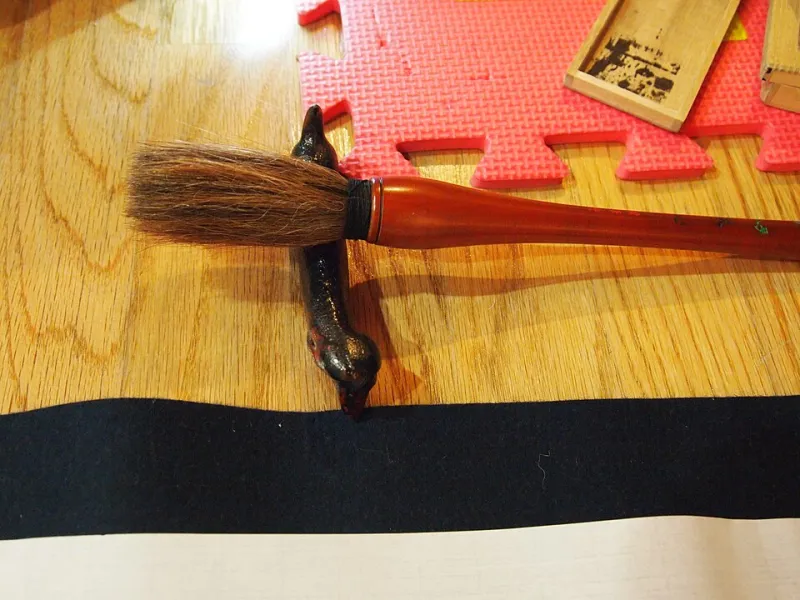
Photo: Ph0kin, CC BY-SA 3.0, via Wikimedia Commons
In the popular imagination, the samurai is defined entirely by his sword. Hollywood has reinforced this image for generations — the lone warrior, blade gleaming, standing at the threshold of violence. Yet within the historical record of feudal Japan, a very different portrait emerges. The most revered samurai were not merely skilled killers. They were educated, cultured, and often deeply accomplished in the literary and visual arts. Among those arts, none was considered more essential to the warrior's inner formation than shodo — the way of the brush.
Calligraphy, and its close relative sumi-e ink painting, occupied a central place in samurai education from as early as the Heian period and remained a cornerstone of warrior culture well into the Edo era. To understand why, one must set aside the modern tendency to separate physical discipline from intellectual or artistic practice. For the samurai, no such division existed.
The Stroke and the Strike: Two Expressions of the Same Discipline
At first glance, dragging a wet brush across rice paper and drawing a katana from its scabbard appear to have nothing in common. Look closer, and the structural parallels become difficult to ignore.
Both acts demand total commitment. In calligraphy, a stroke cannot be erased or corrected. The brush touches the paper, and what follows is irreversible — a permanent record of the practitioner's mental state at that precise moment. Hesitation produces a weak, trembling line. Aggression without control produces a chaotic smear. Only a calm, fully committed mind produces a stroke of genuine quality.
Samurai instructors recognized this immediately. The brush was, in effect, a diagnostic tool. A student's calligraphy revealed the quality of his inner world far more honestly than his sword technique, which could be masked by physical talent or rote repetition. The brush could not lie. This is precisely why masters required warriors to practice shodo with the same seriousness they applied to kenjutsu.
The concept of mushin — often translated as "no-mind" or a state of fluid, unattached awareness — was as applicable to the calligraphy table as it was to the dueling ground. A warrior who could achieve mushin while forming characters in ink was building the same neurological and psychological pathways he would need when blades were drawn and lives were at stake.
Sumi-e and the Philosophy of Restraint
Beyond formal calligraphy, sumi-e ink painting introduced samurai to a different but equally demanding discipline: the philosophy of restraint and negative space. Sumi-e paintings are defined as much by what is absent as by what is present. A master painter conveys an entire mountain range with three sparse strokes, trusting the viewer's imagination to complete the scene.
This aesthetic principle — known broadly as ma, or the meaningful use of empty space — had direct tactical implications. A samurai trained in sumi-e learned to read the unspoken, to find significance in silence, and to act decisively from a position of apparent stillness. These were not poetic metaphors. They were practical cognitive skills.
Miyamoto Musashi, arguably the most celebrated swordsman in Japanese history, was also an accomplished painter. His surviving works — spare, powerful ink renderings of birds and natural subjects — reflect the same economy of motion that defined his legendary niten ichi-ryu two-sword style. Musashi himself wrote in The Book of Five Rings that the warrior must study all arts, not merely martial ones. He practiced what he preached.
Focus, Breath, and the Architecture of Attention
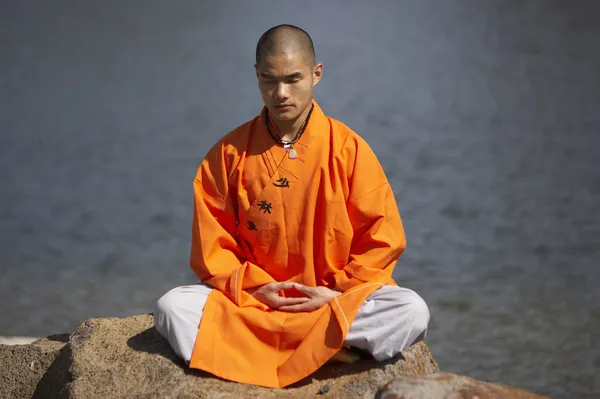
Modern neuroscience has begun to articulate what samurai masters understood intuitively: sustained, deliberate artistic practice restructures the brain's attentional systems. The slow, breath-governed rhythm of calligraphy — preparing the ink, positioning the body, steadying the hand, committing to the stroke — is functionally analogous to mindfulness meditation.
For the samurai, this was not incidental. The structured ritual of the calligraphy session created what we might now call a "pre-performance routine," a reliable pathway into a state of concentrated calm. Warriors who practiced this ritual regularly were better equipped to access that same calm under the extreme psychological pressure of combat.
The breath, in particular, was a shared axis between artistic and martial practice. In both shodo and swordsmanship, the practitioner learns to synchronize movement with exhalation, releasing tension and committing fully to the action at hand. This is not coincidence — it is a deliberate pedagogical design embedded in classical Japanese warrior education.
What This Means for Modern Martial Artists and Professionals
For contemporary martial artists in the United States, this history carries a direct and practical message. The tendency to compartmentalize physical training — to treat time in the dojo as entirely separate from the rest of one's intellectual and creative life — is a relatively modern and, arguably, impoverished approach to development.
The samurai model suggests something richer: that disciplines which cultivate sustained attention, tolerance for irreversibility, comfort with emptiness, and the ability to act fully from a state of calm are not supplementary to martial training. They are martial training, expressed through a different medium.
Many serious martial artists and high-performance professionals in fields from surgery to competitive athletics have discovered this independently. Pre-performance rituals, deliberate breathing practices, and creative disciplines that demand full presence — whether journaling, drawing, or instrumental music — consistently produce measurable improvements in focus and decision-making under pressure.
The samurai arrived at this understanding centuries ago, not through laboratory research but through the rigorous, lived experience of men who could not afford to be wrong.
The Brush as a Daily Practice
For those interested in integrating this dimension into their own training, the entry point need not be elaborate. A simple daily practice — even ten minutes of deliberate, unhurried handwriting or basic ink brushwork — undertaken with full attention and without the option of correction, begins to build the same mental architecture the samurai cultivated.
The goal is not artistic mastery, at least not initially. The goal is the quality of attention itself: the willingness to commit fully to a single, irreversible act, to remain present through discomfort, and to observe one's own mental state honestly through the medium of a stroke on paper.
In that modest daily ritual, something of the samurai's secret weapon becomes accessible to anyone willing to pick up the brush.