The Discipline Hidden in Dullness: How Samurai Turned Repetition Into a Weapon of the Mind
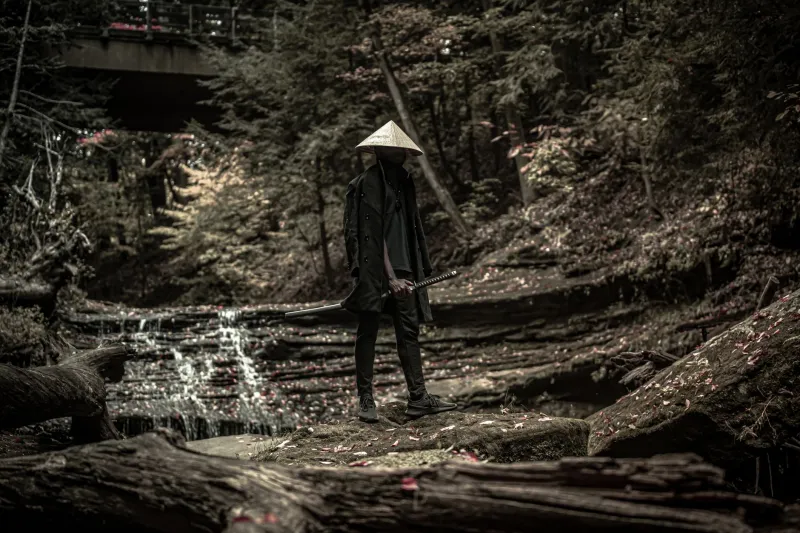
There is a particular discomfort that settles in after you have performed the same sword draw for the four hundredth time in a single afternoon. The mind begins to wander. The body protests with a creeping numbness. Every modern instinct urges you to reach for your phone, change the music, or simply stop. The samurai, however, recognized this moment not as a signal to quit, but as the precise threshold where genuine training began.
In contemporary American culture, boredom is treated as a malfunction — a problem to be solved with stimulation. Yet the warriors of feudal Japan built an entire philosophy of excellence upon the deliberate, even ruthless, cultivation of monotony. Understanding how they did so offers lessons that extend far beyond the dojo, reaching into every arena where sustained excellence is demanded.
The Three Stages That Changed Everything
At the heart of the samurai approach to repetitive practice lies a concept that martial artists still invoke today: shu-ha-ri (守破離). The three characters translate, roughly, as "obey, break, and depart," and together they describe a complete arc of learning that begins with absolute submission to routine.
In the shu phase, the student does not question. He does not innovate. He does not seek shortcuts. He performs the prescribed form — the kata — exactly as his teacher demonstrates it, day after day, month after month, sometimes year after year. There is no room for personal interpretation, no reward for cleverness. The repetition is the point. The boredom is the curriculum.
What the shu phase accomplishes is something that modern neuroscience has since confirmed: through relentless repetition, complex physical and mental patterns are driven below the threshold of conscious thought. The warrior no longer thinks about the movement; he simply is the movement. This is what samurai instructors meant when they spoke of a technique becoming part of the body's memory — not a poetic metaphor, but a precise description of neurological reality.
Only after this foundation is thoroughly laid does the ha phase begin. Here, the practitioner starts to examine the form, probe its edges, and understand the principles underlying each movement. And eventually, in the ri phase, the truly advanced warrior transcends the form entirely — not because he abandoned it, but because he internalized it so completely that it became invisible within him.
The crucial insight is this: there is no shortcut to ri. There is no way to skip the years of dull, grinding shu. The boredom is not an obstacle on the path. It is the path.
When the Kata Becomes a Mirror
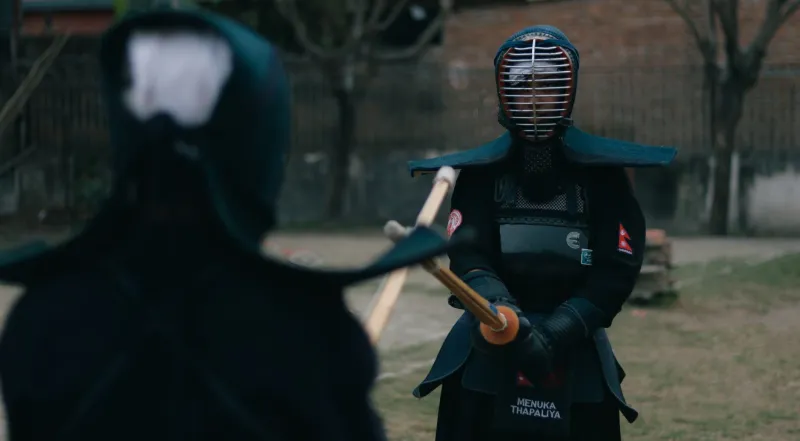
Daily kata practice was the primary vehicle through which samurai navigated the shu phase. A kata is a formalized sequence of movements, encoded with tactical and philosophical meaning, designed to be practiced alone or with a partner in a highly prescribed manner. To an outside observer — and to many impatient beginners — kata can appear tediously mechanical. The same cuts, the same footwork, the same breathing pattern, executed in the same order, indefinitely.
But samurai teachers understood something profound about this apparent tedium: the kata does not merely train the body. It trains the practitioner's relationship with their own mind.
When a movement becomes physically automatic, the conscious mind is freed — or perhaps more accurately, it is exposed. With nothing technical left to focus on, a practitioner begins to notice the quality of their attention itself. Are they truly present in each repetition, or merely going through the motions? Is their breath controlled or ragged? Is their posture subtly collapsing after the twentieth repetition, betraying a hidden impatience? The kata, practiced with genuine commitment, becomes an unflinching diagnostic tool for mental and emotional states that a practitioner might otherwise never confront.
This is why samurai masters often insisted that a student who grew visibly bored or frustrated during kata practice was, paradoxically, making excellent progress. The discomfort was proof that the mirror was working.
Routine as a Form of Armor
Beyond the dojo, the samurai's embrace of structured routine extended into every corner of daily life. Morning rituals, the careful maintenance of weapons and armor, the formal protocols of meal preparation and consumption — none of these were merely cultural decoration. They were understood as ongoing practices of attention and self-governance.
A warrior who could maintain precise, unhurried routine under the benign conditions of peacetime was cultivating the same mental architecture he would need to maintain clarity and composure under the extreme conditions of combat. The logic was direct: if you cannot sustain discipline when nothing is at stake, you will not suddenly discover it when everything is.
This principle has found a striking echo in the training philosophies of several elite American military units, whose documented emphasis on rigorous, repetitive daily habits — from physical training protocols to equipment checks — reflects an intuitive understanding of the same truth the samurai encoded centuries ago. Discipline, they have found, is not summoned in a crisis. It is deposited, in small increments, through years of unremarkable routine.
Rediscovering the Forge in the Age of Distraction
For modern martial artists and high-performers in the United States, the samurai's approach to boredom presents both a challenge and an opportunity. We inhabit an information environment specifically engineered to prevent the kind of sustained, repetitive attention that shu demands. Every app, notification, and content feed is optimized to make the gap between stimuli as short as possible — the precise opposite of what deliberate, monotonous practice requires.
Yet interest in deep practice, deliberate repetition, and structured routine has surged in recent years, from the popularity of authors like Cal Newport and James Clear to the growing movement of practitioners who are returning to traditional martial arts forms precisely because of, rather than despite, their demanding repetitiveness. There is a growing recognition that the capacity to be productively bored — to sustain attention through the unremarkable — is itself a rare and valuable skill.
The samurai did not stumble upon this insight by accident. They built an entire civilization of martial excellence upon it, understanding that the warrior who could find meaning in the ten-thousandth repetition of a sword draw possessed something that no amount of raw talent or battlefield cleverness could replicate: a mind that had been tested against monotony and had not broken.
The Lesson Beneath the Log
Samurai history is frequently framed around its most dramatic moments — the decisive battles, the legendary duels, the acts of fierce loyalty or tragic sacrifice. These moments deserve their prominence. But they are, in a very real sense, the visible tip of an enormous, submerged structure built from thousands of unremarkable days.
The warrior standing composed on a battlefield had not arrived there through inspiration alone. He had arrived through the accumulated weight of every boring morning in the dojo, every repetitive kata performed when he would rather have rested, every routine maintained when no one was watching and nothing seemed to matter.
In that light, boredom was never the samurai's enemy. It was, perhaps, their most reliable ally — the quiet forge in which the steel of the spirit was shaped, tested, and made ready for whatever the world might bring.