Losing as a Laboratory: How Samurai Transformed Defeat Into the Raw Material of Mastery
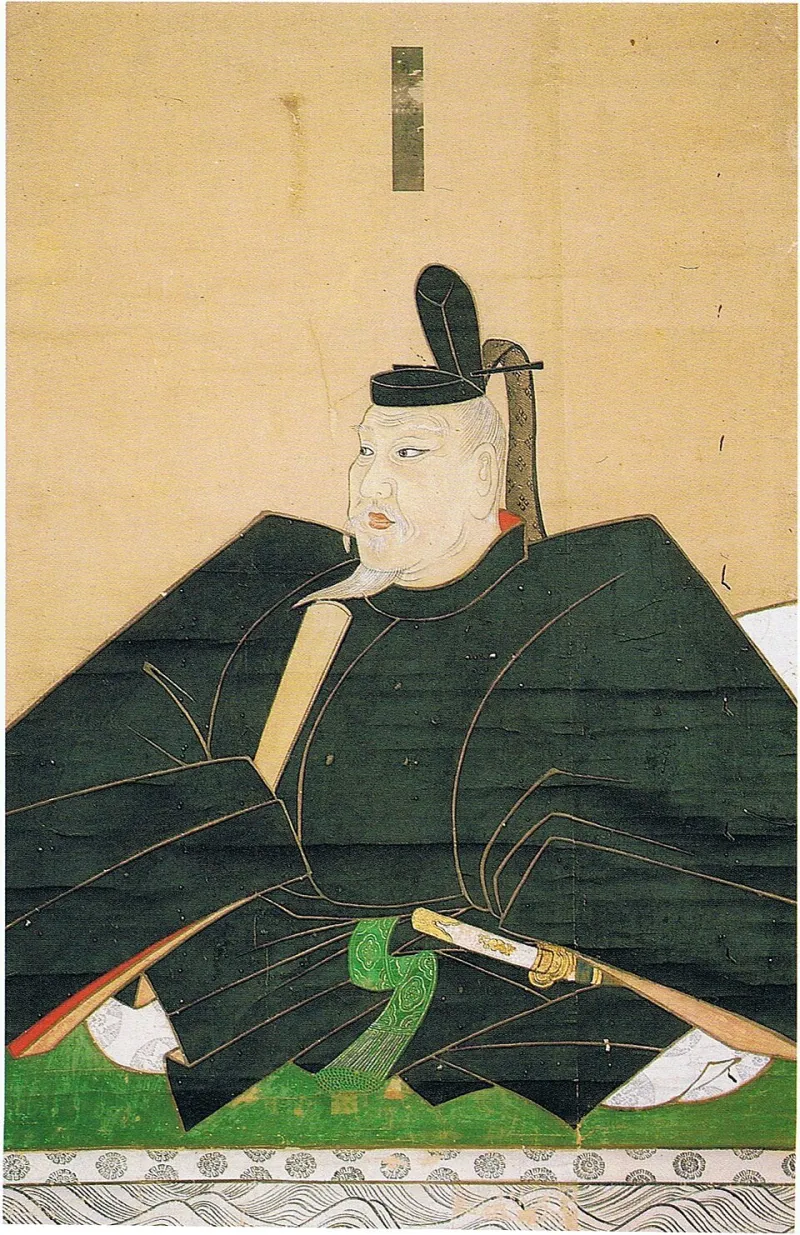
Photo: 伝狩野元信筆, Public domain, via Wikimedia Commons
There is a particular kind of silence that follows a loss. In contemporary American culture, that silence tends to fill quickly — with self-criticism, with the noise of social comparison, with the impulse to move on and leave the wreckage behind. For the samurai of feudal Japan, however, that silence was not something to escape. It was something to enter deliberately, notebook in hand.
The samurai relationship with failure is one of the most misunderstood dimensions of bushido, the warrior code that governed the lives of Japan's military elite. Popular imagination tends to fixate on seppuku — ritual self-disembowelment — as the samurai's ultimate response to defeat, suggesting a culture that treated loss as unforgivable disgrace. The historical record, however, tells a more nuanced and ultimately more instructive story: one in which failure was treated not as a verdict, but as data.
The Record-Keeping Warrior
Among the most revealing artifacts of samurai intellectual culture are the personal journals, training diaries, and strategic texts that surviving warriors left behind. These documents were not memoirs in the reflective, celebratory sense that Western readers might expect. They were closer to field logs — methodical accounts of what had gone wrong, why it had gone wrong, and what adjustments were required.
Miyamoto Musashi, arguably the most celebrated swordsman in Japanese history, lost his first duel. He was thirteen years old when he faced Arima Kihei, an experienced practitioner of a formal school of swordsmanship. Musashi won that encounter through improvisation and raw aggression. But the losses and near-losses that followed across his career of over sixty duels became the foundation of The Book of Five Rings, a text that reads less like a victory lap and more like an extended post-mortem on the nature of combat itself. Musashi's genius was not that he never failed — it was that he never allowed a failure to pass without interrogation.
This impulse toward documentation and analysis was not unique to Musashi. The Hagakure, compiled in the early eighteenth century from the reflections of the Saga domain samurai Yamamoto Tsunetomo, contains numerous passages in which veterans speak candidly about misjudgment, poor timing, and tactical error — always in the service of extracting a lesson rather than assigning blame.
Shame Versus Accountability: A Crucial Distinction
To understand how the samurai approach to failure differs from dominant Western frameworks, it helps to draw a line between shame and accountability. Shame, as contemporary psychologists such as Brené Brown have extensively documented, is an identity-level experience: the belief that one's failure reflects a fundamental deficiency in the self. Accountability, by contrast, is behavioral: the recognition that one's actions produced an unwanted result, and that those actions can be examined and modified.
Western cultural traditions — shaped in part by theological frameworks that tie moral worth to performance and outcome — have historically leaned toward the shame end of this spectrum. Losing, in many Western contexts, carries an implicit suggestion of personal inadequacy.
The samurai framework, rooted in Zen Buddhist philosophy and the Confucian emphasis on self-cultivation, operated from a fundamentally different premise. The self was not a fixed entity to be judged by outcomes; it was a project under perpetual construction. A defeat did not reveal who you were — it revealed where your work remained incomplete. This is a distinction with enormous practical consequences. Shame closes inquiry. Accountability opens it.
The Concept of Hansei and Its Warrior Roots
Modern observers of Japanese corporate culture will recognize the concept of hansei — a practice of honest self-reflection that is embedded in organizations like Toyota and has drawn significant attention from Western business scholars. What is less commonly appreciated is that hansei has deep roots in the warrior tradition. The word itself combines the characters for "turn back" and "examine," and the practice involves a structured, unsentimental review of where one fell short and what corrective action is required.
For the samurai, this was not an annual performance review. It was a continuous discipline, applied after each encounter — whether a duel, a battle, or a sparring session in the dojo. The goal was not self-flagellation but precision: to isolate the specific variable that had produced the undesired outcome and to address it with the same directness one might bring to repairing a broken blade.
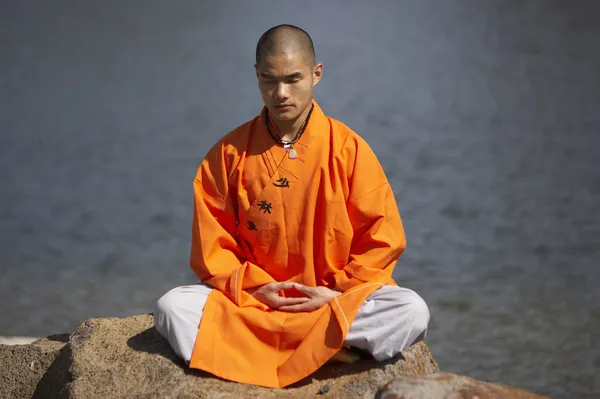
This approach demands a particular kind of emotional regulation that is itself a martial skill. To examine one's own failures honestly, without the distortion of defensiveness on one side or excessive self-punishment on the other, requires a settled, disciplined mind. The samurai cultivated that settledness through meditation, through the deliberate routines of daily practice, and through the philosophical acceptance of impermanence that Zen tradition places at the center of the warrior's worldview.
What Modern Resilience Research Confirms
The psychological literature on resilience and growth has, in recent decades, arrived at conclusions that would have felt familiar to any seasoned samurai. Carol Dweck's foundational research on growth mindset — the understanding that ability is developed rather than fixed — maps closely onto the samurai conception of the self as a perpetual work-in-progress. Dweck's findings demonstrate that individuals who interpret failure as information rather than judgment show markedly greater persistence, adaptability, and long-term achievement.
Similarly, research on post-traumatic growth suggests that the depth of insight available after a significant setback is directly proportional to the quality of reflection brought to bear on it. Avoidance — the instinct to move past failure as quickly as possible — tends to foreclose the very learning that could prevent its recurrence. The samurai, who had neither the luxury of avoidance nor a cultural framework that encouraged it, were practicing what researchers now call "deliberate reflection" centuries before the terminology existed.
Applying the Warrior's Framework Today
For martial artists training in American dojos, the samurai approach to failure offers a concrete and actionable model. The practice begins with a simple but demanding commitment: to treat every sparring loss, every failed technique, every moment of hesitation or poor judgment as a question rather than a conclusion.
What, precisely, went wrong? Was it a timing error, a lapse in awareness, a physical limitation, or a failure of strategy? Where in the sequence did the outcome become inevitable? What would a corrected version of that encounter look like, and what specific training would be required to produce it?
These are not rhetorical questions. They are the same questions that samurai posed to themselves in the quiet after combat, and they represent the difference between experience that accumulates and experience that merely passes.
The dojo, at its best, is a laboratory in the truest sense — a controlled environment in which failure is not only permitted but engineered, so that its lessons can be extracted under relatively safe conditions. The samurai understood this intuitively. Their training was designed to produce failure at a pace the practitioner could learn from, gradually expanding the threshold of what they could handle without being overwhelmed by it.
The Final Lesson
Perhaps the most enduring insight embedded in the samurai approach to defeat is this: mastery is not the absence of failure. It is the progressive refinement of one's response to it. The warrior who has never lost has simply not yet encountered a sufficiently demanding opponent. The warrior who has lost and learned is already, in the most meaningful sense, further along the path.
In a culture that increasingly celebrates the highlight reel and treats setbacks as embarrassments to be minimized, the samurai tradition offers a bracing alternative — one that demands more of us, but promises something more substantial in return. Not the comfort of a perfect record, but the hard-won authority of someone who has looked failure in the face, asked it the right questions, and emerged with answers worth carrying forward.