The Honorable Deceiver: How Samurai Commanders Turned Cunning Into a Martial Virtue

American culture tends to draw a clean, comfortable line between honor and deception. We admire the straight-talking hero who wins through courage and transparency. We distrust the schemer. It is a tidy moral framework — and it would have confused many of Japan's greatest samurai commanders considerably.
The warriors of feudal Japan operated within a moral universe that was, by Western standards, genuinely paradoxical. Bushido demanded absolute sincerity, unflinching loyalty, and a readiness to die rather than compromise one's name. And yet the same tradition produced military strategists who elevated psychological misdirection to something approaching an art form — not in spite of their honor codes, but in deliberate conversation with them.
Understanding how those two things coexisted is not merely an exercise in historical curiosity. It reveals something essential about the samurai mind, and about the enduring relevance of Japanese martial philosophy to anyone who competes, leads, or simply navigates a world that rarely fights fair.
The Strategic Canon Behind the Deception
The intellectual foundation for samurai deception was not homegrown. Sun Tzu's The Art of War, which entered Japanese military culture through Chinese and Korean transmission, provided a philosophical scaffolding that Japanese commanders adapted with considerable sophistication. Sun Tzu's central axiom — that all warfare is based on deception — was not received as a license for dishonesty. It was studied as a statement about the nature of conflict itself.
Japanese commanders synthesized this Chinese strategic tradition with indigenous concepts rooted in Zen Buddhism and Shinto. The result was a martial philosophy in which deception was understood as a form of mushin — the "no-mind" state in which a warrior acts without telegraphing intention, without attachment to a fixed form. The commander who could conceal his strategy was not being dishonest in the moral sense; he was demonstrating mastery of self, environment, and perception simultaneously.
This distinction mattered enormously. Deception deployed for personal gain or cowardly self-preservation was considered deeply dishonorable. Deception deployed as strategic artistry in service of a legitimate military objective occupied an entirely different moral category.
Takeda Shingen and the Theater of War
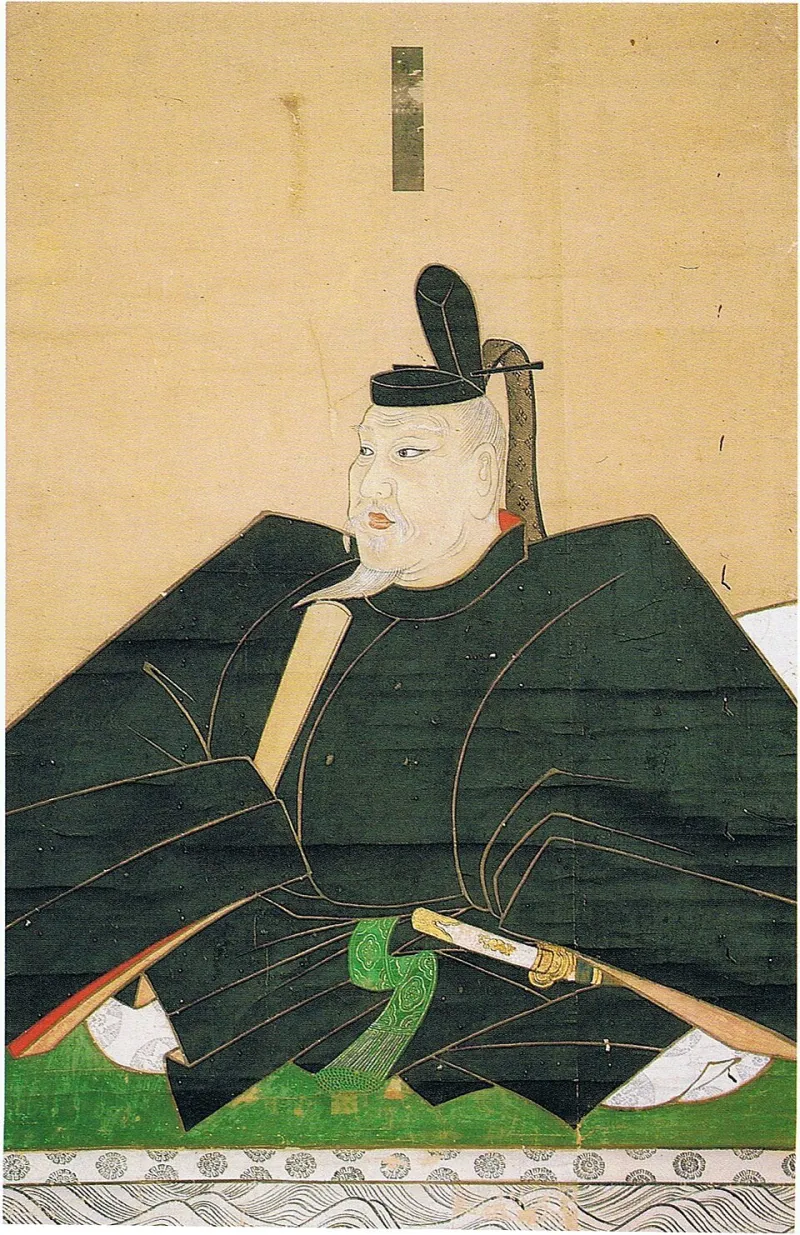
Few figures illustrate this tension more vividly than Takeda Shingen, the sixteenth-century daimyo whose campaigns against Uesugi Kenshin at the battles of Kawanakajima have been analyzed for centuries. Shingen was a commander of extraordinary psychological sophistication. He understood that battles are won and lost in the minds of commanders before a single soldier moves, and he invested enormous energy in controlling what his enemies believed to be true.
Shingen famously concealed the movements of his forces, manipulated the timing of engagements to exploit enemy assumptions, and cultivated a personal mystique so formidable that his mere presence on the field altered the calculations of opposing generals. None of this was considered a stain on his honor. His contemporaries regarded it as evidence of exceptional martial intelligence — the capacity to see the battlefield as a dynamic psychological space rather than a simple physical one.
The famous quote attributed to Shingen — "Furinkazan," drawn from Sun Tzu and meaning swift as wind, quiet as forest, fierce as fire, immovable as mountain — was inscribed on his battle standard. It was, in essence, a declaration of strategic philosophy: that the greatest warrior adapts, conceals, and strikes from unexpected angles. The mountain endures. The wind does not announce itself.
Where Deception Ended and Treachery Began
The samurai ethical framework did not grant unlimited license to deception, and understanding the boundaries is as instructive as understanding the practice itself.
The critical moral distinction was between deceiving an enemy in the field — a legitimate combatant in a recognized conflict — and betraying a lord, breaking an oath, or manipulating a subordinate for personal advancement. The latter was considered among the gravest offenses a samurai could commit. The former was considered a dimension of tactical excellence.
This framework bears a striking resemblance to the ethical codes governing modern military operations and competitive athletics. The NFL coach who installs elaborate misdirection into his offensive scheme is not considered a cheat; he is considered a tactician. The intelligence officer who runs a sophisticated disinformation campaign against an adversary state operates within a recognized ethical and legal framework distinct from criminal fraud. The context, the relationship, and the intent determine the moral weight.
Samurai commanders understood this intuitively centuries before it became a subject of formal military ethics scholarship.
Psychological Warfare as Spiritual Discipline
Perhaps the most counterintuitive dimension of samurai deception philosophy is its relationship to Zen practice. The cultivation of an unreadable exterior — the capacity to conceal one's intentions, emotions, and plans — was not merely a tactical skill. It was considered a form of spiritual discipline.
The Zen concept of mushin, often translated as "empty mind" or "no-mind," describes a state of complete presence in which the practitioner is not attached to any particular thought, plan, or outcome. In combat, a warrior operating from mushin does not telegraph his next move because he has not yet decided upon it — he responds to conditions as they arise. This state is inherently deceptive to an opponent, not through calculation, but through the absence of the predictable patterns that betrayal creates.
In this sense, the greatest samurai deception was not a clever ruse. It was the achievement of a mental state so fluid and present that the enemy could find no fixed point to read. The warrior who had truly emptied himself of ego and attachment became, by definition, strategically opaque.
The Modern Resonance
Contemporary martial artists and competitive strategists continue to grapple with the same tension the samurai navigated. Brazilian jiu-jitsu practitioners speak openly about "setting traps" — deliberately presenting a vulnerability to draw an opponent into a position that will be their undoing. Chess grandmasters describe moves designed entirely to mislead. High-level negotiators in business and diplomacy study misdirection as a legitimate professional skill.
What the samurai tradition offers to these modern practitioners is not a simple permission slip for manipulation. It offers something more valuable: a philosophical framework for understanding when and why strategic concealment serves a legitimate purpose, and when it crosses into the kind of dishonesty that corrodes character and destroys trust.
The samurai did not resolve the tension between honor and cunning by eliminating it. They held it, examined it, and built a remarkably sophisticated moral architecture around it. That architecture rewards careful study.
Steel, Spirit, and the Space Between
The myth of the samurai as a purely transparent, forthright warrior — noble in every action, incapable of strategic complexity — is a romanticized Western projection that does a disservice to the actual depth of Japanese martial philosophy. The historical record reveals something far more interesting: warriors who took both their honor codes and their strategic intelligence with absolute seriousness, and who spent considerable intellectual energy working out how those two commitments could coexist.
They arrived at an answer that still resonates. Deception is not the opposite of honor. Deception in service of ego, cowardice, or betrayal is the opposite of honor. Deception as disciplined strategic art, wielded by a warrior who has mastered himself before attempting to master the battlefield — that is something else entirely.
It is, in the truest sense of the phrase, the warrior's way.