The Strength Hidden in Surrender: How Samurai Mastered Confidence Through Radical Humility
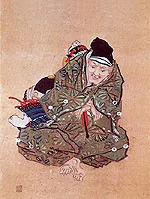
Photo: 松本楓湖, Public domain, via Wikimedia Commons
American culture has long celebrated the image of the self-made individual—the competitor who refuses to yield, who projects certainty even in the face of doubt, and who treats the admission of weakness as something close to professional suicide. From the locker room to the boardroom, the prevailing wisdom holds that confidence is built by doubling down, not by stepping back. Yet the samurai tradition, one of history's most demanding warrior cultures, operated on a fundamentally different premise: that the man who could not admit his own errors was, in truth, the most fragile man in the room.
This is not a minor footnote in the history of Bushido. It is, in many respects, its psychological cornerstone.
The Paradox at the Heart of the Warrior Mind
The word shugyō—often translated as austere training or disciplined practice—carried within it an implicit acknowledgment of incompleteness. A warrior undertaking shugyō was, by definition, admitting that he had not yet arrived. This was not considered shameful. It was considered the only honest starting point.
The classical texts of Japanese martial philosophy are remarkably consistent on this point. Miyamoto Musashi, whose Go Rin No Sho (The Book of Five Rings) remains one of the most studied strategic manuals in the world, devoted considerable attention to the dangers of self-deception. He was particularly critical of warriors who cultivated the appearance of mastery without subjecting themselves to genuine scrutiny. For Musashi, the warrior who could not perceive his own flaws was not confident—he was blind, and blindness on the battlefield was a death sentence.
Musashi himself famously sought out rivals who might expose his weaknesses, traveling across feudal Japan in a period of deliberate self-examination known as musha shugyō, or warrior pilgrimage. The purpose was not simply to accumulate victories. It was to be tested, to be found wanting in whatever ways remained hidden, and to carry those discoveries back into practice.
Learning from the Rival: A Different Kind of Courage
Perhaps the most striking expression of samurai humility was the practice of openly crediting a rival or opponent with superior technique. This ran directly counter to the ego-preservation instincts that govern so much of competitive culture in the modern West.
The swordsman Yagyū Munenori, who served as the official fencing instructor to the Tokugawa shogunate in the early seventeenth century, wrote extensively about the danger of clinging to one's established methods when confronted with a superior approach. In his treatise Heihō Kadensho, Munenori described the skilled warrior's mind as one that remained perpetually open—not because it lacked conviction, but because genuine conviction required constant refinement through honest self-assessment.
This was not passive acceptance. It was an active, disciplined practice. A samurai who witnessed a technique that surpassed his own was expected to study it, to ask questions, and where appropriate, to acknowledge the other practitioner's excellence directly. Far from diminishing the observer's status, this behavior was understood to reflect a quality of character that elevated him.
Contrast this with the modern American tendency to respond to being outperformed with deflection, rationalization, or the quiet resentment of those who refuse to learn from the people who have bested them. The samurai recognized something that contemporary psychology is only now beginning to confirm: the ego's defensive maneuvers do not protect confidence. They calcify it, preventing the growth that genuine confidence requires.
Public Acknowledgment and the Ritual of Honest Reflection
Within the structured hierarchies of feudal Japanese martial schools, or ryū, there existed formal mechanisms for acknowledging error that would seem almost radical by contemporary standards. A student who had executed a technique incorrectly was not merely corrected in private. The correction was often witnessed, discussed, and incorporated into the collective learning of the school.
More significantly, senior practitioners—including masters of considerable reputation—were expected to model this same transparency. A teacher who could not demonstrate honest self-appraisal in front of his students was considered to be withholding something essential from their education. The implicit message was clear: the willingness to be wrong publicly is not a weakness to be hidden. It is a discipline to be practiced.
This stands in sharp contrast to the leadership cultures many Americans inhabit, where authority is frequently conflated with infallibility and where admitting a mistake can feel like surrendering ground that will never be recovered. The samurai tradition suggests that this conflation is not only psychologically unsound—it is strategically dangerous.
Why Vulnerability Forges Resilience
Modern behavioral research has arrived, somewhat circuitously, at conclusions that samurai philosophers reached centuries ago. The psychologist Carol Dweck's foundational work on growth mindset demonstrates that individuals who frame failure as information—rather than as a verdict on their fundamental worth—develop far greater long-term resilience than those who protect a fixed self-image at all costs. The samurai, operating without the benefit of academic psychology, built this insight directly into their training culture.
The mechanism is not difficult to understand. When a warrior's identity is not staked on being perpetually correct, the discovery of an error carries no existential threat. It is simply data. He can examine it clearly, extract what is useful, and move forward without the psychological weight of having to defend a narrative about his own invulnerability. This is precisely the condition under which genuine improvement becomes possible—and genuine improvement is the only foundation on which durable confidence can be constructed.
Bravado, by contrast, is a closed system. It requires the constant expenditure of energy to maintain the fiction that no errors exist, no rivals surpass, and no lessons remain unlearned. It is exhausting, and it is brittle. A single significant failure can shatter it entirely, because the identity it protected was never grounded in actual capability—only in the performance of capability.
A Framework for the Modern Practitioner
For American martial artists, students of history, or anyone seeking to build a more durable inner foundation, the samurai model offers a concrete and actionable path. It begins not with the grand gesture of public self-flagellation, but with the quiet, honest practice of honest self-inventory.
Ask, after each training session or difficult encounter, not merely what went well—but what was avoided, what was rationalized, and what a more honest observer might have seen that you chose not to. Seek out those who challenge your methods, not to validate your existing approach, but to genuinely test it. When a rival or colleague demonstrates something that surpasses your current ability, acknowledge it—to them, and to yourself.
These are not acts of weakness. They are, in the truest sense of the samurai tradition, acts of courage. And it is from that particular kind of courage—the willingness to see clearly and act accordingly—that unshakeable confidence is ultimately forged.
The blade is only as strong as the process that shaped it. So, too, is the mind of the warrior.