When Warriors Set Down the Sword: The Samurai Who Found Honor in Poetry and Reflection
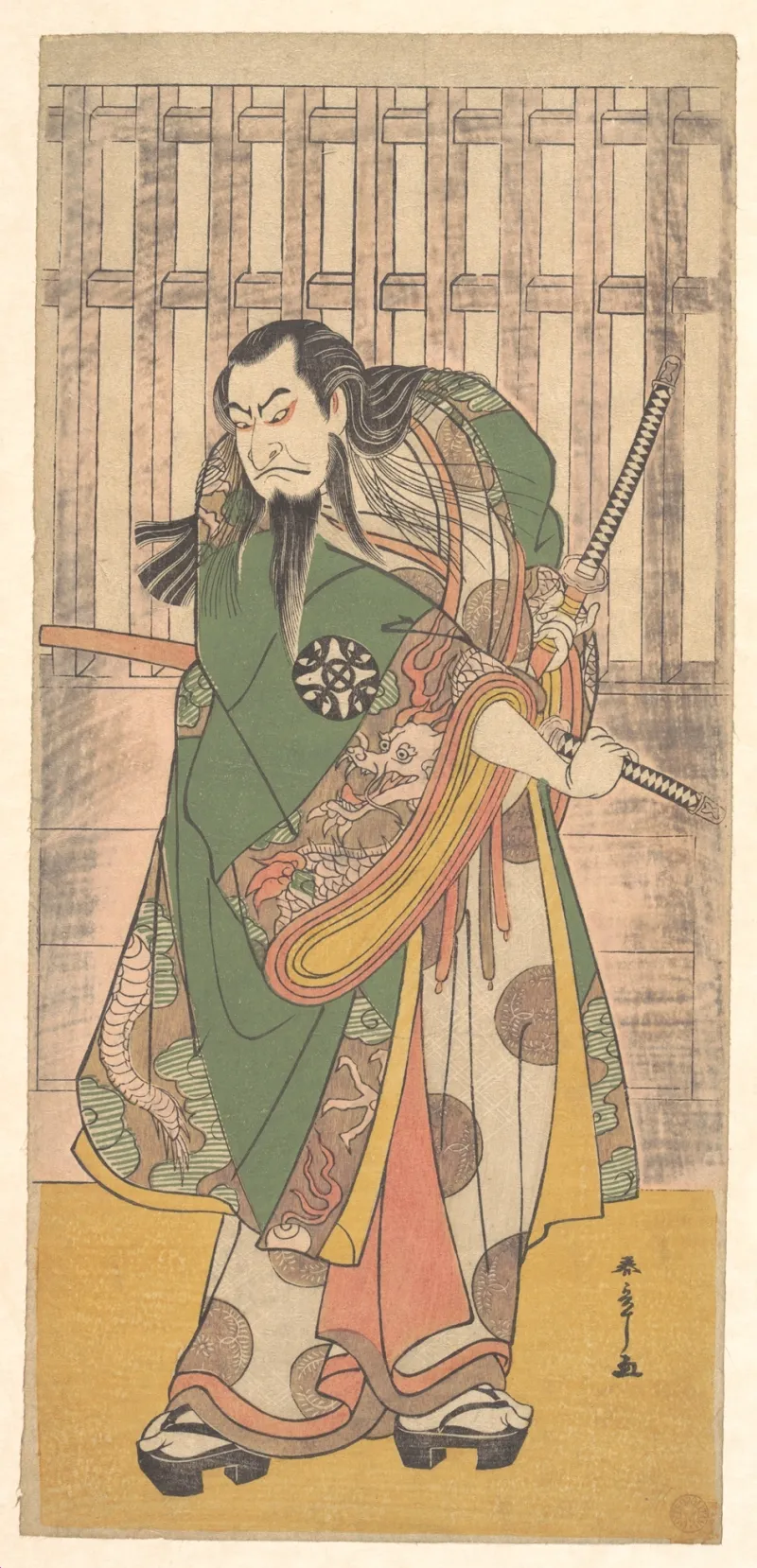
Photo: Katsukawa Shunshō, CC0, via Wikimedia Commons
There is a particular kind of courage that popular culture rarely celebrates — the courage to walk away from the identity that defined you, to set down the instrument of your mastery, and to begin again in unfamiliar territory. For a handful of Japan's most formidable samurai, this was not a failure of nerve but an act of profound philosophical conviction. These were men who had proven themselves utterly on the battlefield and then, at the height of their reputation, chose a different kind of proving ground entirely.
Their stories complicate the familiar narrative of the samurai as a figure frozen in perpetual readiness for violence. They suggest, instead, that the deepest expression of bushido — the warrior's way — was not the perfection of killing but the cultivation of a fully realized human life.
The Warrior-Poet as Archetype
The figure of the warrior-poet is not unique to Japan, but Japanese culture developed it with particular sophistication. From the Heian period onward, literary accomplishment was considered inseparable from genuine nobility of character. A warrior who could compose a moving death poem in the moments before battle was regarded as more fully formed than one who could only fight.
This cultural expectation created the conditions for a remarkable phenomenon: samurai who, having exhausted the possibilities of the martial life, turned with equal seriousness to poetry, painting, philosophy, and Zen practice — not as hobbies, but as the primary work of their remaining years.
Hosokawa Fujitaka: The General Who Became a Literary Guardian
Few figures illustrate this transition more dramatically than Hosokawa Fujitaka, known also by his literary name Yusai. A highly capable military commander who served under Oda Nobunaga and later Toyotomi Hideyoshi, Fujitaka was one of the most dangerous men of the Sengoku period. He was also, by any serious measure, one of Japan's most important literary scholars.
Fujitaka was the sole living master of the Kokin Denjuju, the secret oral transmission of interpretive knowledge surrounding the Kokinwakashu, Japan's most revered imperial poetry anthology. When, in 1600, his castle at Tanabe came under siege by a vastly superior force loyal to Ishida Mitsunari, an extraordinary thing occurred: the Imperial Court intervened and negotiated a ceasefire. The reason was not political — it was literary. The court could not allow the Kokin Denjuju to perish with Fujitaka inside a burning castle.
That a military siege was halted to preserve one man's poetic knowledge tells us something essential about how Edo-era Japan understood the relationship between martial and cultural mastery. Fujitaka himself had clearly made a similar calculation long before, investing decades in scholarship with the same discipline he had once applied to warfare.
Yagyu Munenori and the Turn Inward
Yagyu Munenori occupies a singular position in samurai history. As the official sword instructor to the Tokugawa shogunate and one of the most technically accomplished swordsmen of his era, his martial credentials were beyond dispute. Yet his most enduring legacy is Heiho Kadensho — "The Life-Giving Sword" — a text that reframes swordsmanship almost entirely as a vehicle for psychological and spiritual development.
In his later years, Munenori's writing increasingly emphasized the cultivation of fudoshin — an immovable, unshakeable mind — over the refinement of physical technique. His final chapters are less concerned with how to defeat an opponent and more concerned with how to transcend the very impulse toward conflict. He drew heavily from Zen teachings, particularly those of the monk Takuan Soho, whose influence on Munenori's philosophical evolution was profound.
Munenori did not abandon swordsmanship. Rather, he arrived at a position where swordsmanship had become a metaphor for something larger: the disciplined governance of one's own interior life. The sword, for him, had become a lens through which to examine the nature of consciousness itself.
Matsuo Basho: The Samurai Who Became a Pilgrim Poet
Matsuo Basho occupies a somewhat different position in this tradition. Born into a minor samurai family in Iga Province, Basho served as a page and companion to a young lord before the lord's early death effectively ended his samurai career. Rather than seeking another position, Basho turned with complete commitment to poetry.
His development of haiku as a serious literary form — spare, imagistic, saturated with the Buddhist awareness of impermanence — drew directly on the warrior sensibility in which he had been raised. The haiku demands the same qualities the samurai cultivated: absolute economy of means, total presence in a single moment, and the willingness to let that moment stand without elaboration or defense.
Basho's famous Oku no Hosomichi — "The Narrow Road to the Deep North" — chronicles a grueling journey through remote Japan undertaken in his final years, partly as pilgrimage, partly as creative discipline. The physical rigor of the journey mirrored the austerity of his verse. He was, in every meaningful sense, still training — simply in a different art.
What Their Transformations Teach Us
For American readers navigating their own questions of identity, career transition, and legacy, these warriors offer something more than historical curiosity. They model a relationship to mastery that is fundamentally expansive rather than fixed.
In contemporary culture, there is significant pressure to maintain a singular, consistent identity — particularly around professional achievement. The athlete is expected to remain the athlete. The executive who pivots to teaching, or the decorated soldier who becomes a painter, is often regarded with puzzlement. The samurai tradition suggests this puzzlement reflects a failure of imagination.
The warriors who set down the sword did not become less themselves. In most cases, they became more fully themselves, applying the discipline, focus, and philosophical depth cultivated through decades of martial training to pursuits that allowed those qualities to express themselves in new and enduring forms.
The transition also required a particular kind of humility — the willingness to be a beginner again, to enter a domain where one's martial reputation offered no advantage. This is no small thing for a man whose identity has been built around excellence and authority. That these warriors made the transition with evident seriousness and, in many cases, genuine distinction, speaks to the transferability of the warrior's core disciplines.
The Deepest Expression of Bushido
Perhaps the most important insight these figures offer is a corrective to the most common misreading of bushido: the idea that the warrior's way is fundamentally about the readiness to die. It is, more precisely, about the readiness to live — fully, deliberately, and without the comfort of self-deception.
For the samurai who chose the pen, the brush, or the pilgrim's staff in their later years, that readiness expressed itself in the courage to redefine their own purpose. They did not wait for permission. They did not seek validation from the culture that had celebrated them as warriors. They simply looked honestly at what remained to be done and did it.
That, by any measure, is the warrior's way.